Loyalty Program Without an App: How to Build Customer Loyalty
Author: Viktor Bobiński
Acquiring a new customer costs on average five times more than keeping an existing one, yet most local businesses have no system that rewards a return visit. A paper card gets lost in a wallet, and a mobile app requires a download, an account, and a notifications opt-in — three barriers that turn away most customers before they ever reach the first reward. This article shows you how to build a loyalty program that works without paper and without an app, while also boosting your Google reviews and marketing contact list.
Why invest in returning customers?
Most local marketing budgets go toward acquiring new visitors — ads, first-visit promotions, social media presence. Yet customers who have already chosen your restaurant or salon once generate the largest share of revenue and, more importantly, are the most likely to recommend it further. A loyalty program turns an occasional return visit into a repeatable habit.
What does losing a loyal customer really cost?
Acquiring a new customer requires advertising, time spent building trust, and often a discounted first visit. A returning customer no longer generates those costs — yet most businesses do nothing to consciously keep them for longer. Without a system rewarding repeat visits, a customer is just as likely to switch to a competitor the moment they spot a better promotion.
Why do loyalty apps usually fail?
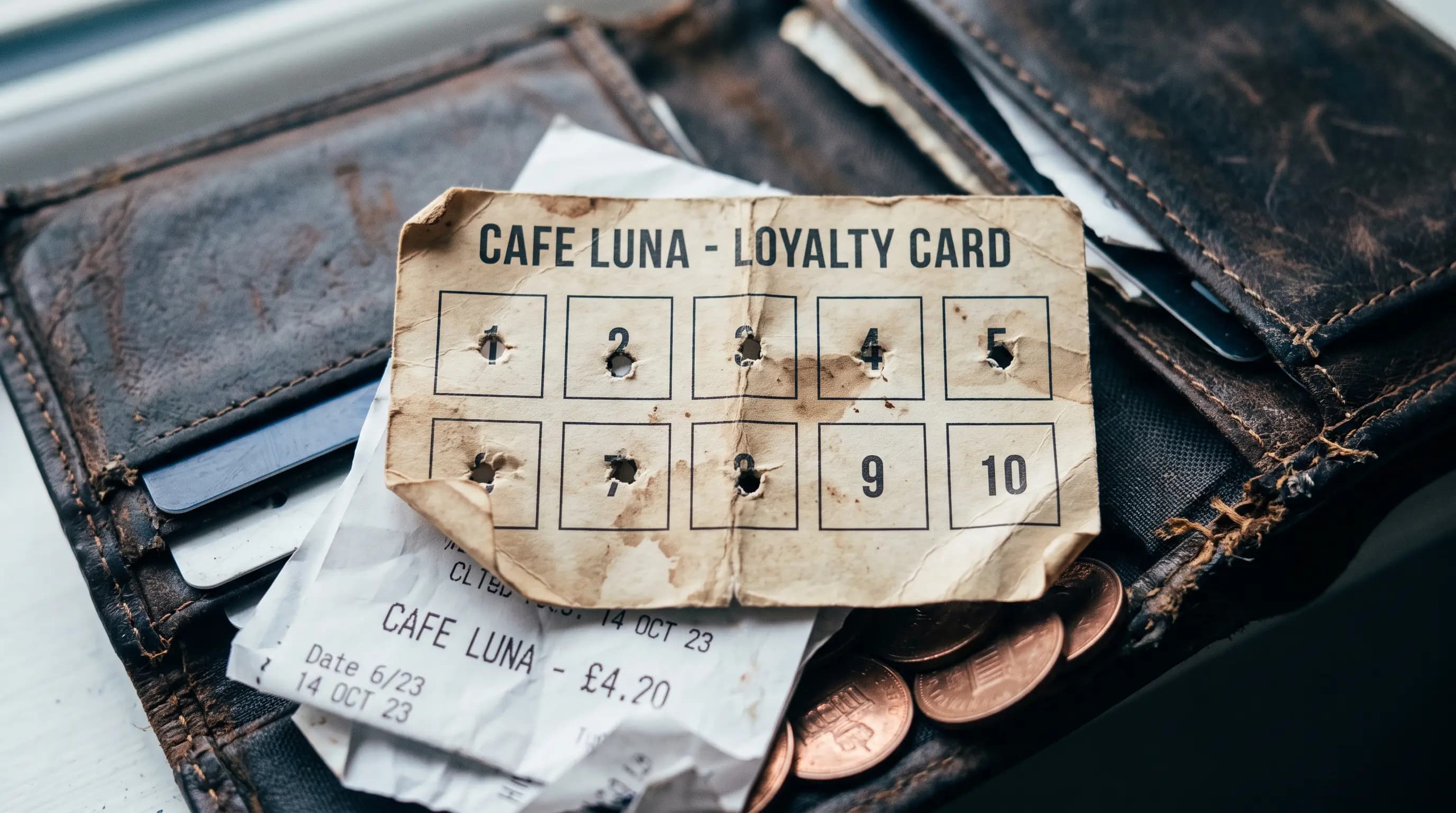
A classic mobile app built for a single restaurant or salon has one flaw that can't be worked around: nobody wants to download a separate app for every business they visit occasionally. Downloading, registering, and accepting notifications are three barriers that lose most customers before they ever see the first benefit of the program. A paper card has the opposite problem — it gets lost, gets dirty, and gives you no data at all about who actually comes back, or how often.
How does a digital loyalty card without an app work?
A middle ground between paper and an app is a digital loyalty card built on near-field communication. The customer installs nothing — the entire interaction happens in the phone's browser, and visits are logged automatically with a single tap against an NFC stand at the till or front desk.
NFC technology in practice
NFC (Near Field Communication) is the same contactless standard behind tap-to-pay card and phone payments. An NFC stand or sticker needs no power source — the customer simply holds their phone a few centimetres away, and the system opens the right page in their browser. No app, no Bluetooth pairing, no QR code to scan in poor lighting.
The customer journey, step by step
- The customer taps their phone against the NFC stand at the till, counter, or front desk.
- The browser opens a page showing their digital card — no login, identified by phone number.
- The system logs another visit and shows how many are left until the reward.
- Once the threshold is reached, the customer gets an SMS notification about the reward.
- On the next visit, staff simply hand over the reward based on the number in the dashboard.
The whole process takes the customer about a second — faster than digging a paper card out of a wallet. On the business side, every visit lands straight in the admin dashboard, where you can see visit history, the number of active cards, and each customer's progress toward their reward.
“A loyalty program that asks any effort of the customer stops working by the second visit.”
How to design an effective loyalty program
Technology alone isn't enough — how effective a program is depends on how you set the reward threshold and how well you match it to the real visit frequency of your industry. Too high a threshold discourages customers; too low one generates no real margin or loyalty.
Reward threshold and visit frequency
A good starting point is looking at how often an average customer visits your place in its natural cycle. A hair salon or barbershop visited every 4–6 weeks needs a different threshold than a café visited every morning. The rule is simple: the reward should be reachable within a reasonable time — from a few weeks up to two or three months at most — otherwise the customer forgets about the program before ever reaching the goal.
Example reward thresholds by industry
- Café: every 8th coffee free — reached in about two weeks with daily visits.
- Restaurant: a free dessert or starter after 5 visits.
- Hair salon / barbershop: 50% off every 6th haircut — matched to the natural visit cycle.
- Beauty salon: one free maintenance treatment after 4 treatments.
- Gym / fitness studio: a reward for a monthly streak, e.g. a free personal training session after 12 check-ins.
More important than the reward's size is its simplicity — the customer should understand the rule instantly, without reading terms and conditions. “Every 8th coffee free” works better than a points system requiring conversion.
Take care of your Google Business Profile
and climb higher in the rankings
Sign up and get a free course — learn how to optimize your Google Business Profile yourself, so your business appears higher in local search results.
No spam. Unsubscribe anytime.
Loyalty programs, SMS marketing, and Google reviews
A loyalty card based on a phone number has one more advantage over paper — every visit simultaneously builds a contact list you can use for further marketing. That's three things combined into one system: loyalty, promotion, and reputation.
How to combine loyalty with SMS coupons
When a customer collects visits on a digital card and consents to marketing contact under GDPR, their number enters a list you can use to send personalised SMS coupons. A customer who is one visit away from a reward but hasn't visited in three weeks is a natural target for a reminder with a small bonus — exactly when winning them back is easiest.
Why loyal customers leave more reviews
A customer who visits regularly and feels valued by the reward program is far more willing to spend ten seconds leaving a review than someone visiting once. That's why it's worth pairing the moment a visit is logged with a request for a rating — for example, when a reward is collected. That's exactly how the Starlinkee NFC stand works: one device handles the loyalty card, the Google review form, and a filter that protects against unfair reviews, all at once. If you want to see how collecting reviews itself works step by step, check out our article on how to get Google reviews fast. We've also covered how to reply to those reviews — including the difficult ones — in our article on how to respond to Google reviews.

“Customer loyalty doesn't come from a discount — it comes from how easy it is to come back.”
How to roll out a loyalty program step by step
Rolling out a digital loyalty program at a local business doesn't require integrating with a point-of-sale system or a week of staff training. The whole process comes down to a handful of simple steps.
Rollout steps
- Set the reward threshold and type, matched to your natural visit frequency.
- Place the NFC stand somewhere visible — at the till, counter, or front desk.
- Brief staff to remind customers to tap their phone at every visit.
- Add a short note about the program on the table, in the window, or at the entrance.
- Monitor the admin dashboard to see how many customers are actively collecting visits, and respond with an SMS coupon when activity drops.
The most common rollout mistakes
- Setting the reward threshold too high — customers give up before seeing any benefit.
- No reminder from staff — customers quickly forget to tap their phone if nobody mentions it.
- Overly complicated rules — a points system with conversions discourages more than a simple visit counter.
- No visible information about the program — customers won't use something they don't know exists.
- Ignoring the dashboard data — visit data alone won't boost loyalty if nobody reacts to a drop in activity with a coupon or reminder.
Summary — loyalty without friction
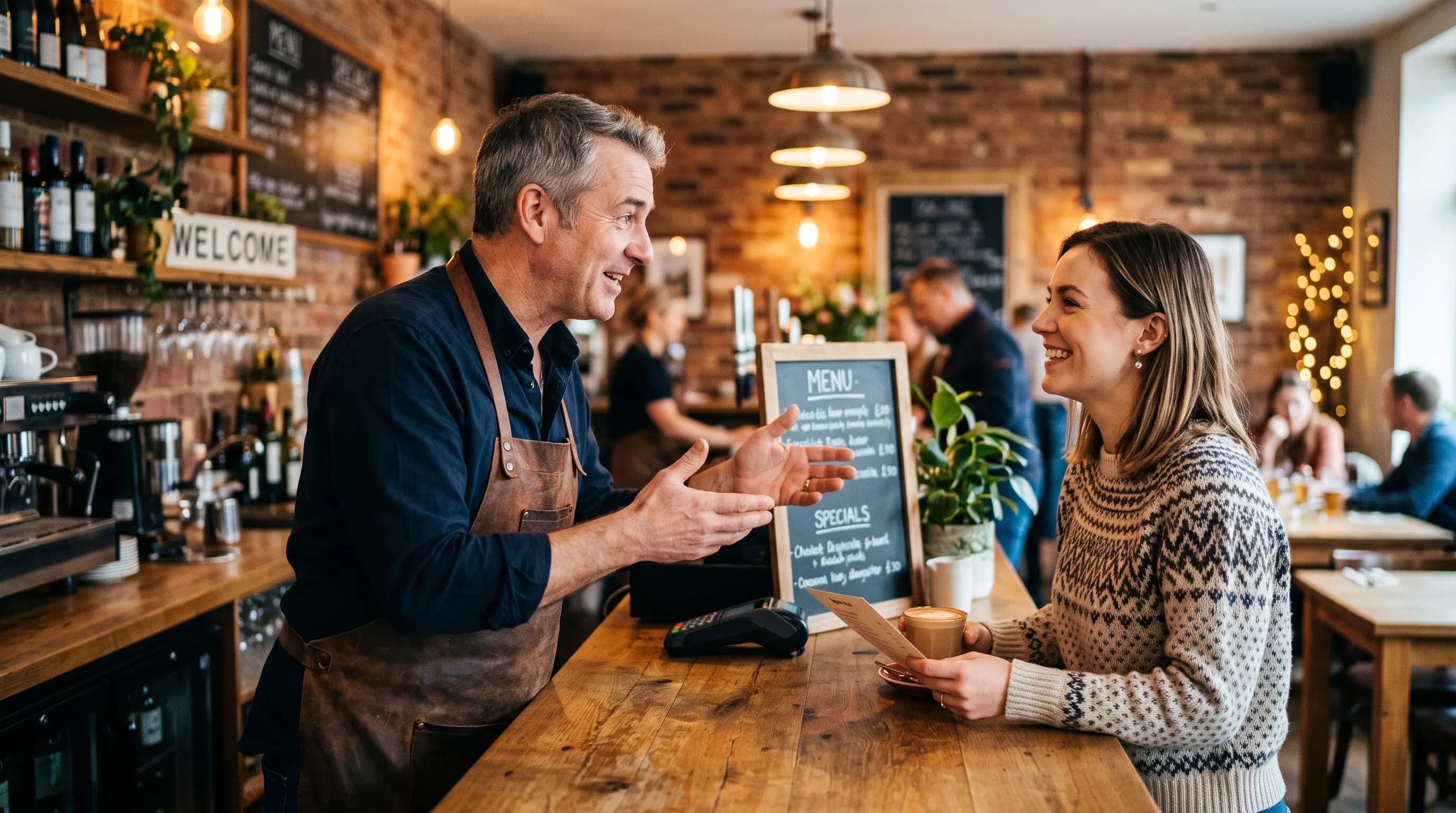
Customers don't drop out of loyalty programs because they don't want the reward — they drop out because the path to it is too much hassle. A paper card gets lost, an app requires a download, and neither gives you any data on who actually comes back. A digital NFC-based card removes that barrier: a single tap, zero installs, full visibility in the admin dashboard. If you want to combine visit tracking with Google reviews and SMS coupons in one system, see how the Starlinkee NFC stand works, with a built-in digital loyalty card.
FAQ — Frequently asked questions
- Does the customer need to download an app to use a digital loyalty card?
- No. The entire card works in the phone's browser after tapping it against the NFC stand — no install, no account, no password login.
- What reward threshold works best?
- One the customer reaches within a few weeks up to two or three months at most, matched to the natural visit frequency of your industry. A reward that's too far off loses its motivational power.
- Can data collected through a loyalty program be used for SMS marketing?
- Yes, provided you obtain GDPR-compliant marketing consent when collecting the phone number. Once granted, the number can be used to send coupons and program reminders.
- Does a loyalty program work for salons and clinics too, not just restaurants?
- Yes. It works anywhere a customer returns on a cycle — hair salons, barbershops, beauty clinics, gyms, or car workshops. The key is matching the reward threshold to the industry's real visit rhythm.
- How is an NFC loyalty card different from a QR code?
- A QR code requires opening the camera, decent lighting, and aiming the phone, which can be awkward at the till. An NFC stand just needs a tap — it works in a fraction of a second and doesn't depend on scan quality.
Viktor Bobiński
Starlinkee
Founder of Starlinkee and an expert in marketing, sales and IT. He specialises in NFC systems for collecting Google reviews and profile-ranking strategies for local businesses — from restaurants to salons and reception desks.