Google Reviews for Hair Salons and Barbershops: How to Get More Ratings
Author: Viktor Bobiński
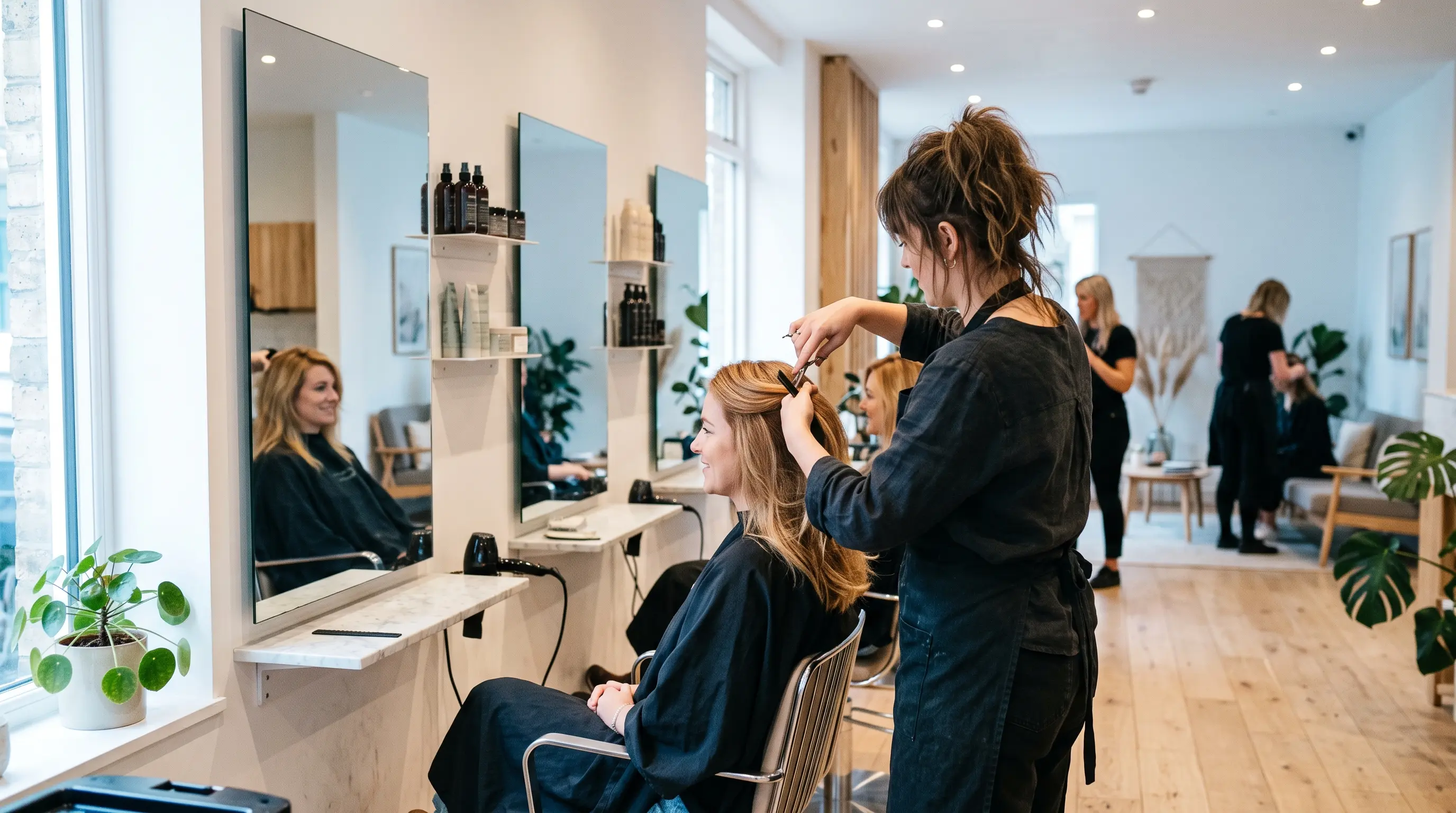
In the beauty and barber industry, the booking decision is made before the customer even picks up the phone. It happens while scrolling through competing salon listings, where every star and every fresh review counts. A hairdresser, barber, or beautician sells a result the customer cannot check before the visit — which is why other customers' reviews replace a portfolio and become the main sales argument.
Why do Google reviews decide the first booking at a salon or barbershop?
In beauty and barber services, customers buy a result they cannot see before the transaction — a new haircut, hair color, or facial treatment. That naturally creates anxiety, which only reviews from people who already experienced it can ease. The more fresh, specific reviews a prospective customer sees, the less risk they feel before calling or booking online.
What does a customer see before even calling the salon?
Before opening a salon's website, customers compare several listings side by side on Google Maps — rating, number of reviews, and photos. In hair and beauty, this stage is remarkably short, because choice is huge and loyalty to a new place is zero. A salon with a 4.9 rating and fifty fresh reviews beats one with a 4.5 rating and ten year-old reviews, even at a worse price. Read more about building such a profile from scratch in our article on getting Google reviews fast and legally.
Why is the beauty and barber industry more sensitive to reviews?
A haircut or beauty treatment is highly personal — it affects the customer's appearance, not just a product or a meal. That is why reviews for these services are read far more carefully than, say, a grocery store review. Customers look for specific signals: does the hairdresser listen, does the color last more than a month, does the barber keep to the booked time. A salon that collects reviews systematically builds a library of such proof instead of relying on occasional entries from happy customers.
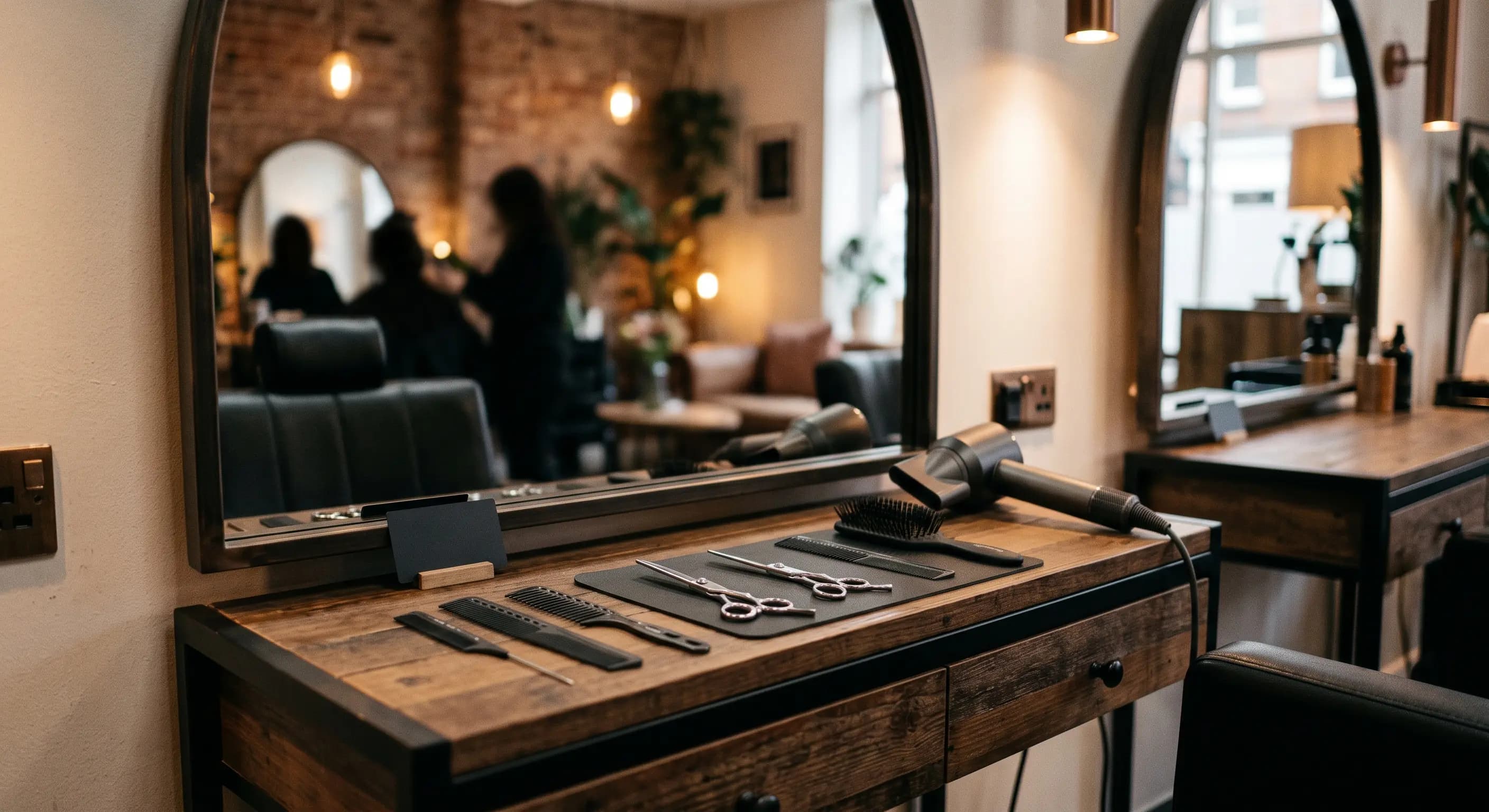
“At a salon or barbershop, the customer isn't rating a product — they're rating their trust in the hands they hand their appearance to.”
How to collect reviews right after a salon or barbershop visit?
Collecting reviews at a salon differs from hospitality in one key way — customers often leave with wet or freshly styled hair and have no desire to fumble with their phone at the reception counter. The review system therefore has to be instant and effortless, fitting into the few seconds between payment and walking out the door.
What is the best moment to ask for a review?
The best moment is right after the customer sees the result in the mirror and expresses satisfaction — before moving to the till. That is the emotional peak of the entire visit. Asked then, the request is tied directly to that good feeling, not to a payment, which often dampens enthusiasm.
How does NFC review collection work at reception and the styling chair?
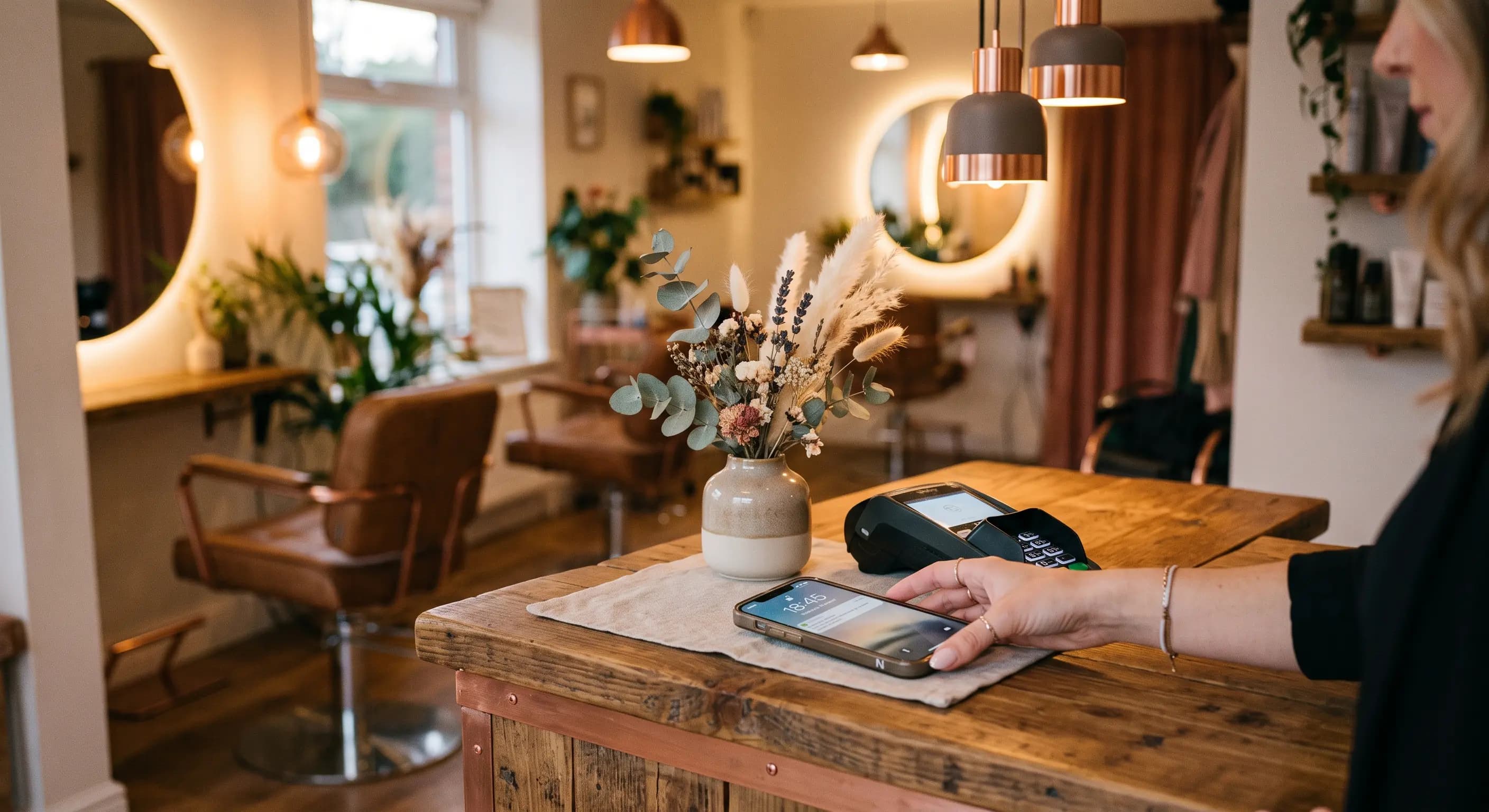
A small NFC plate by the styling mirror or beauty station lets you ask for a review before the customer even gets up from the chair. A tap of the phone opens the Google review form automatically — no typing the salon name, no searching maps. At reception, the same device works as an extra touchpoint for card-paying customers who already have their phone in hand.
Take care of your Google Business Profile
and climb higher in the rankings
Sign up and get a free course — learn how to optimize your Google Business Profile yourself, so your business appears higher in local search results.
No spam. Unsubscribe anytime.
How to handle difficult reviews in the beauty and barber industry?
Nowhere else is dissatisfaction as visible to the outside world as with a haircut or hair color — the customer carries the "evidence" on their head for weeks. That makes negative emotions run stronger than in other industries, and a salon's response has to be fast and well judged.
What to do when a customer is unhappy with their color or haircut?
The best response happens right at the salon — offer a fix the same day or the soonest possible appointment, before frustration turns into a public review. If a negative review does appear, respond calmly and specifically, offering a free correction. Other readers then judge not the situation itself, but how the salon resolves problems.
Why does a review filter protect a salon from an unfair rating?
A legal review filter sends happy customers straight to Google, while offering unhappy ones an additional internal form to report the issue — without blocking anyone's access to the public rating. This is entirely different from the prohibited "review gating", which screens customers before they can leave a review. With such a filter, a salon learns about a customer's dissatisfaction before it reaches Google, and has time to respond privately.
“A salon customer who returns every month is worth more than ten one-off visitors — as long as you give them a reason to come back.”
How to combine review collection with salon customer loyalty?
A hair salon or barbershop has something one-off service points don't — a natural cycle of customers returning every few weeks. That is the best foundation for a loyalty program that uses the same NFC plate not only to collect reviews, but also to build a base of regulars.
Why do salon and barbershop customers return on a cycle?
Hair grows, color fades, and a beard needs regular trimming — a natural visit rhythm independent of mood or a competitor's promotion. A salon that taps into this rhythm and offers a reward for a set number of visits turns a plain necessity into a reason to come back specifically to them, not to the salon next door.
How to set the reward threshold for a salon loyalty card?
It's worth matching the reward threshold to the actual visit frequency for a given service — a barbershop whose customers return every 3–4 weeks can set the reward at the fifth visit, while a beauty salon with less frequent treatments works better with a threshold of three or four visits. You'll find a detailed guide to building such a system, plus concrete thresholds for different industries, in our article on a loyalty program without an app.
Summary — how do salons and barbershops win more reviews?
In the beauty and barber industry, Google reviews replace a portfolio customers can't see before their visit. The key is asking for a review at the peak of satisfaction — right by the mirror, before the customer leaves the salon — and removing every technological barrier that could put them off. The same NFC device that collects reviews can simultaneously drive a loyalty program matched to that service's natural visit rhythm, turning one-off guests into regulars.
FAQ — Frequently asked questions
- Should I ask for a review right after the treatment, or wait?
- Ask right away, while the customer sees the result in the mirror and expresses satisfaction. That's the strongest positive emotion of the whole visit — waiting until they get home significantly lowers the chance of getting a review.
- How should I respond if a customer is unhappy and threatens a bad review?
- Offer a free correction the same day or at the earliest possible appointment. Solving the problem before a review is posted is always more effective than responding to one that's already public.
- Does an NFC plate work at a hairdressing chair where hands are often busy?
- Yes. A tap takes a fraction of a second, so the plate works best right after the cape comes off, when the customer's hands are free and they're looking at the final result in the mirror.
- What reward threshold works best for a hair salon loyalty card?
- Usually the fifth visit, matching a 3–4 week visit rhythm. For beauty salons with less frequent treatments, a threshold of three or four visits works better.
- Can a loyalty program and review collection run on the same NFC plate?
- Yes. A single NFC device can send a happy customer to the Google review form and register their visit on a digital loyalty card at the same time — no extra hardware and no app to install.
Viktor Bobiński
Starlinkee
Founder of Starlinkee and an expert in marketing, sales and IT. He specialises in NFC systems for collecting Google reviews and profile-ranking strategies for local businesses — from restaurants to salons and reception desks.
Related articles
How to Get Google Reviews Fast? Automation and Guidelines
Find out how to legally and effectively collect Google reviews. Learn when to ask for a review, which barriers to remove, and why an NFC system changes the game.